
Understanding Rainwater Diversion Systems: A Comprehensive Guide for Property Protection
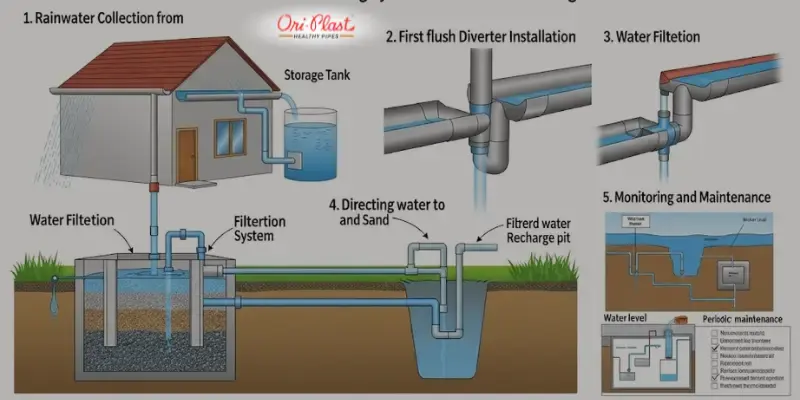
Gutters and downspouts collect roof water, but they do not decide where it finally goes. That job belongs to the diversion system: the extensions, drains and grading that carry water away from your foundation and release it safely. In Massachusetts, where many homes have fieldstone or block basements and spring brings heavy snowmelt plus soaking rain, diversion is often the difference between a dry basement and a damp one.
Why Diversion Matters
A single downspout can release a large volume of water during a heavy storm, all concentrated in one spot. If that spot is next to the house, the soil becomes saturated and presses water against the foundation. Over time, that can lead to seepage, efflorescence on basement walls, settling of walkways and erosion of planting beds. Moving the discharge point even a modest distance away from the house makes a meaningful difference.
The Main Types of Diversion
Downspout extensions
The simplest option. Rigid or flexible sections attach to the bottom elbow and carry water several feet out. Hinged versions flip up for mowing. They are inexpensive and effective, but they get knocked loose and need occasional checking.
Splash blocks
Concrete or plastic pads that spread water out and keep it from digging a hole. Best used with an extension, not as a substitute for one.
Buried drain lines
Solid pipe runs underground from the downspout to a daylight outlet at a lower point in the yard, or to the street where allowed. They are tidy and out of sight, but they can clog if gutters send leaves down the pipe, so keeping gutters clean or guarded is important.
Dry wells
An underground chamber or gravel pit that holds water and lets it soak slowly into the soil. They suit flat lots without a natural low spot, provided the soil drains reasonably well. Heavy clay soils, common in parts of the region, may limit their effectiveness.
Rain barrels
Barrels collect roof water for gardens and lawns. They need an overflow route to a safe discharge point and should be drained before freezing weather arrives.
Grading
The ground itself is part of the system. Soil around the foundation should slope away from the house so water keeps moving once it lands.
Choosing the Right Approach for Your Lot
- Sloped lot with a natural low area: buried lines to daylight
- Flat lot with sandy soil: a dry well may work well
- Small yard or tight lot lines: extensions and splash blocks
- Gardens near the house: rain barrels with an overflow route
- Recurring basement dampness: start with grading and discharge distance
Many homes use a mix. The front of the house might get buried lines for appearance, while the back uses simple extensions.
Keeping the System Working
Diversion depends on clean gutters upstream. Leaves and grit washed down a downspout end up in buried lines and dry wells, where they are hard to reach. Regular gutter cleaning or properly installed gutter guards protect your investment. Check extensions each spring and fall, and watch where water goes during the next heavy rain.
Get Expert Help
Busy Bee designs and installs practical rainwater diversion solutions alongside our gutter services across Worcester, Middlesex, Norfolk and Suffolk County. Book a free estimate and we will help you choose the right setup for your property.
Let Busy Bee handle it
Skip the ladder. Get a free, no-obligation estimate from our fully insured team.
Get My Free Estimate