
Top 10 Best Preventive Maintenance Practices for Gutters to Protect Your Home
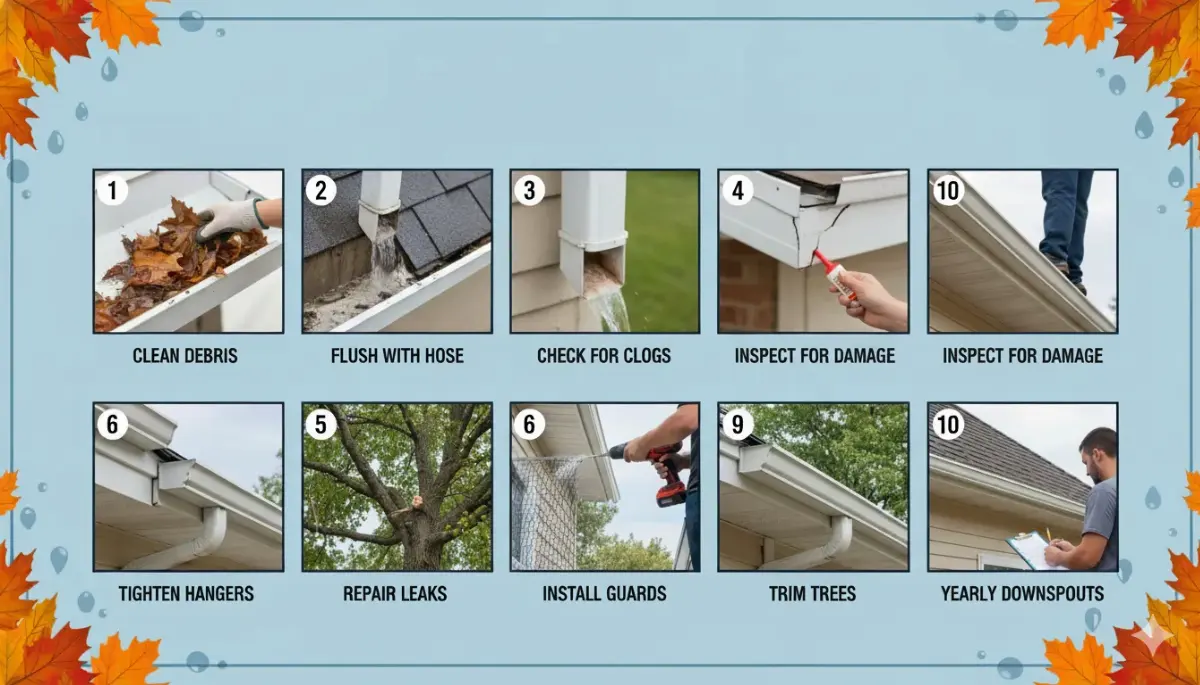
A gutter system is more than a trough nailed to the house. It is a channel that collects water, a drainage path that carries it away, and a connection to the roof edge that has to stay tight and dry. Preventive maintenance works best when you look after each of those parts. The ten practices below are grouped that way, so you can see how each one protects your home.
Protecting the Gutter Channel
1. Clean on a schedule, not in a crisis
Most Massachusetts homes benefit from a cleaning in late spring and another after the fall leaf drop. Waiting until water spills over the edge means the damage has already started. A regular gutter cleaning schedule keeps the load light and the water moving.
2. Check the pitch
Gutters need a slight, steady slope toward each outlet. After a rain, look for puddles sitting in the channel. Standing water means the pitch has shifted and the gutter will collect sediment and rust faster.
3. Inspect the hangers
Heavy snow loads loosen fasteners every winter. A quick spring look for gaps between the gutter and fascia, or sections that dip, catches problems while they are still simple.
4. Reseal leaky seams
Corners and end caps are the usual drip points. Clean and dry the joint fully, then apply fresh gutter sealant rather than layering it over cracked old caulk.
Keeping the Drainage Path Clear
5. Test every downspout
Run a hose into the top of each downspout and watch the bottom. A weak trickle points to a clog, usually at an elbow.
6. Extend the discharge
Water should leave the downspout well away from the foundation. Extensions or splash blocks keep it from soaking the soil next to basement walls.
7. Watch the grading
Even good extensions fail if the ground slopes back toward the house. Keep soil and mulch beds pitched away from the foundation so water keeps going once it lands.
Guarding the Roof Edge
8. Trim overhanging branches
Oaks, maples and pines that hang over the roof feed the gutters all year. Cutting them back reduces debris and keeps limbs from crashing onto the gutters during nor'easters.
9. Consider gutter guards
On heavily wooded lots, quality gutter guards cut down how quickly the channel fills. They still need occasional checks, but they stretch the time between cleanings.
10. Plan ahead for ice dams
Clean gutters before winter so snowmelt can drain. If ice builds up along the eaves anyway, avoid chipping it with tools and call for professional ice dam removal instead.
Putting the List Into Practice
You do not have to tackle all ten in one weekend. A simple routine covers most of them:
- Spring: clean, check hangers and pitch, test downspouts
- Summer: trim branches and inspect grading around the house
- Fall: clean after leaves drop and confirm extensions are in place
- Winter: watch for icicles and ice buildup along the eaves
If ladder work is not for you, that is a sensible call. Busy Bee is fully insured, based in Northborough and happy to handle any of these tasks. Book a free estimate and let us take preventive maintenance off your list.
Let Busy Bee handle it
Skip the ladder. Get a free, no-obligation estimate from our fully insured team.
Get My Free EstimateHigh demand · limited spots
Free Estimate
Please call — our volume is high and spots are limited. A quick call is the fastest way to lock in your free estimate.
Call (508) 499-9193Free Estimate
We usually reply within one business day. Prefer to talk? Call (508) 499-9193.
More tips & news
- Gutter Maintenance by Effort: Quick Habits, Weekend Jobs and When to Call a Pro
- The Ultimate Guide to Choosing the Best Roof and Gutter Cleaning Services Near You
- The Ultimate Guide to Preventive Maintenance for Home Exterior Cleaning: Boost Curb Appeal and Longevity
- 5 Ways to Improve Curb Appeal Through Exterior Home Cleaning
- Essential Exterior Home Services in Worcester County
- Top Exterior Home Services in Worcester County
- All tips & news →