
The ultimate guide to commercial gutter Cleaning
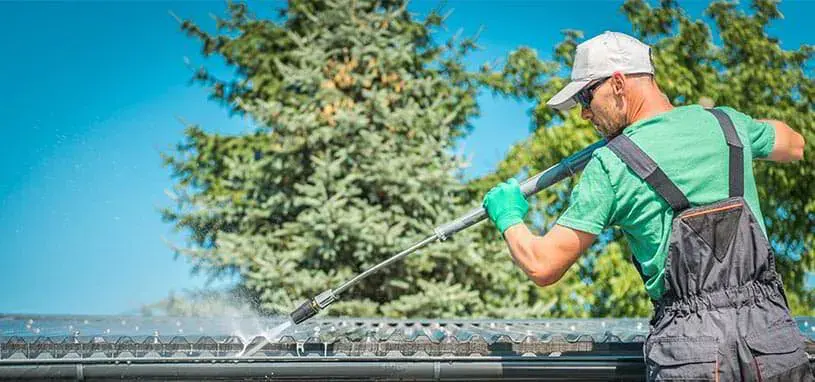
Gutters on a commercial building do the same basic job as gutters on a house, but almost everything else is different. The roofs are larger, the drainage systems are more varied, the heights are greater and the consequences of a failure reach customers, tenants and employees. Whether you own a retail plaza, an office building, a medical practice or a restaurant, here is what you need to know about keeping your drainage working.
How Commercial Roofs Drain
Many commercial buildings have flat or low-slope roofs, and water leaves them in several ways. Understanding which your building uses is the first step toward proper maintenance.
Box gutters
These large rectangular gutters are often built into the roof edge or parapet. They hold a great deal of water and debris, and when they clog, water can back up onto the roof membrane itself.
Scuppers and conductor heads
Scuppers are openings in a parapet wall that let water exit the roof edge, often into a collector box that feeds a downspout. Leaves, plastic bags and debris collect at the scupper and block the opening.
Interior roof drains
Some flat roofs drain through openings in the middle of the roof that connect to internal pipes. Their strainers need regular clearing so water does not pond on the roof.
Standard K-style gutters
Smaller commercial buildings, offices converted from houses and many strip centers use conventional gutters, simply larger and longer.
Why the Stakes Are Higher
Ponding water on a flat roof adds significant weight and speeds up wear on the membrane. Overflowing gutters above entrances create slip hazards on sidewalks and, in winter, dangerous ice patches where customers walk. Water intrusion can damage inventory, equipment and records, and force closures during repairs. A clogged drain is a maintenance issue; a customer injury on an icy walkway is a liability issue.
Building a Commercial Maintenance Plan
- Identify every drainage point: gutters, scuppers, roof drains and downspouts.
- Schedule cleanings at least in spring and late fall, with more visits for sites near trees.
- Add post-storm inspections after nor'easters and major wind events.
- Keep records of each visit and any issues found, for insurance and budgeting.
- Work with an insured contractor that has the equipment for your building height.
Working Around Business Operations
A good commercial service plans around your schedule, not the other way around. That can mean early morning visits before a store opens, staging equipment away from entrances, coordinating with property managers about parking and keeping walkways clear for customers. Aerial lifts let crews reach high gutters safely without ladders blocking doors. Communication matters, too: you should know when the crew is arriving, what they found and whether anything needs repair.
Partner With a Reliable Team
Busy Bee provides gutter cleaning for businesses across Worcester, Middlesex, Norfolk and Suffolk County. We are fully insured, use aerial lifts and water-fed poles, and work without long-term contracts. When we find damage, our repair service can address it, and our power washing keeps storefronts and walkways looking sharp. We are available Monday through Friday, 7 AM to 7 PM. Request a free estimate for your property.
Let Busy Bee handle it
Skip the ladder. Get a free, no-obligation estimate from our fully insured team.
Get My Free Estimate