
Decoding the Mystery of Streak-Free Windows
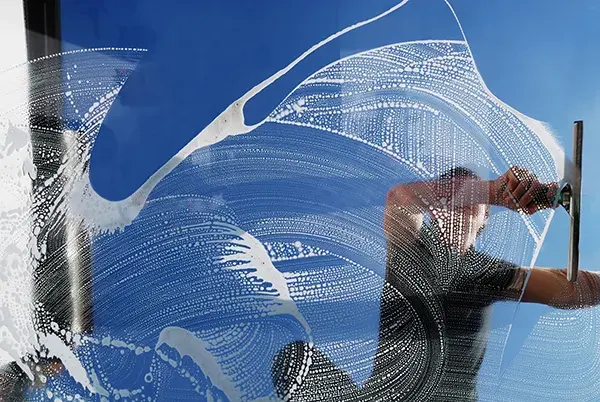
You spray, you wipe, the glass looks perfect, and then the afternoon sun hits it and reveals a web of hazy arcs. Streaks feel random, but they almost always have a specific cause. Think of this post as a diagnostic guide: identify what kind of streak you are looking at, and the solution becomes obvious.
The Three Culprits Behind Most Streaks
Leftover residue
Most streaks are simply cleaning solution that never got removed. Household glass sprays often contain surfactants, fragrances or ammonia that dry into a thin film. Using too much soap in a bucket does the same thing. When light passes through that film at an angle, it shows up as a smear.
Minerals in the water
Much of Massachusetts has moderately hard water, and many rural homes in Worcester County rely on private wells with even higher mineral content. When tap water evaporates on glass, it leaves calcium and magnesium behind as spots or cloudy patches. If your streaks look chalky and resist wiping, minerals are the likely problem.
Drying too fast
Cleaning a south-facing window at noon in July means your solution starts evaporating before your squeegee reaches it. The result is dried edges and lap marks. Overcast mornings and shaded sides of the house are your friends.
Reading the Streak Pattern
The shape of a streak tells you where it came from:
- Straight horizontal lines usually mean a nicked or worn squeegee blade
- Curved swirl marks point to wiping with a towel that was already damp or dirty
- A thin line along the edge of the frame is water that wicked back out of the gasket
- Hazy, even cloudiness across the pane suggests too much soap or a product film
- White rings and spots that will not budge are mineral deposits, not dirt
Fixing Each Type
For residue, cut back dramatically on soap. A few drops of dish detergent in a bucket of water is plenty. Rinse the glass if you have been using a commercial spray for months, since layers build up over time.
For blade lines, replace the rubber. Squeegee rubber is inexpensive, and a sharp, clean edge is the single biggest upgrade a DIY cleaner can make. Store the squeegee so nothing presses on the blade.
For edge lines, finish by wiping the blade dry between strokes and detailing the perimeter with a lint-free microfiber cloth folded into a sharp corner.
For mineral spots, ordinary cleaning will not help. Light spotting may respond to a mild acidic cleaner, but etched or long-standing deposits need professional hard water stain removal to avoid scratching the glass.
Why Pure Water Changes Everything
The reason professional exterior work often looks better is that we use water-fed poles that deliver purified water. With the minerals filtered out, there is nothing left to dry on the glass, so it can air-dry clear without a squeegee. That also means no soap residue at all. It is the same principle as distilled water in a steam iron: remove what causes the buildup, and the buildup disappears.
When to Let Someone Else Solve It
If you have tried fresh blades, less soap and better timing and still see haze, the issue may be on the outside surface you cannot easily reach, or it may be old mineral damage. Our residential window cleaning team can tell you which, and the estimate is free. You can book a standard cleaning through the appointment page; if your home has exterior storm windows or grid windows, give us a call at (508) 499-9193 so we can schedule accordingly.
Let Busy Bee handle it
Skip the ladder. Get a free, no-obligation estimate from our fully insured team.
Get My Free Estimate